
Every organiser faces the same question: when a name has been in use for more than a decade and the industry's hot topics have turned over, should it be changed?
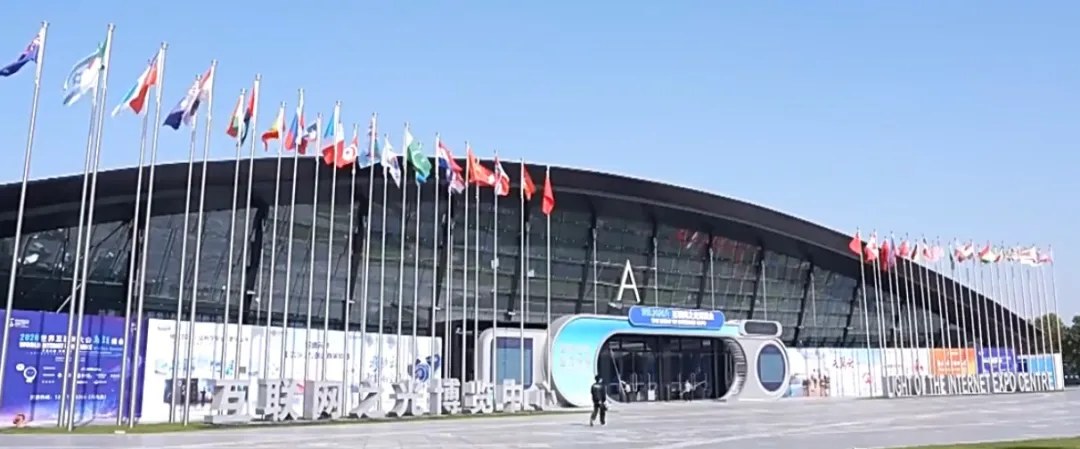
On 3 November, the 2026 World Internet Conference Wuzhen Summit opened in Wuzhen, Zhejiang. The event held its first edition in 2014, when the industry's hottest topics were mobile internet, mobile payments and online-to-offline services. At this year's opening, the main forum discussed large models and embodied intelligence.
Same venue, same nameplate, different content.
Another event runs into a similar question. The 25th China Internet Conference, held in Beijing in July, took as its theme "A New Journey of Intelligent Opening, a Future of Integrated Innovation — Writing a New Chapter of '15th Five-Year Plan' Development with the Combined Strength of Digital and Intelligent". Its sub-forums were titled "Computing and Power Coordination" and "Data for AI". The Nanjing session held in October carried the full name "2026 China Internet Conference Nanjing Session and Conference on Artificial Intelligence Empowering the Integration of Digital and Real Economies".
Everything except the event name has changed.
Meanwhile, several newer names are growing fast. The 9th World Artificial Intelligence Conference, held in Shanghai in July, passed 100,000 square metres of exhibition space for the first time, with more than 1,100 exhibitors, over 3,000 exhibits and more than 140 forums — tickets were hard to get. The 11th World Robot Conference, held in Beijing in August, drew more than 300 companies into 50,000 square metres of halls and 557,000 on-site visits.
At the Light of the Internet Expo running alongside the Wuzhen Summit, the official positioning is "a comprehensive showcase of the intelligent internet". The zones are named "Space, Air, Sea and Land: New Connectivity", "Intelligence Emerging: New Space" and "Human-Machine Symbiosis: New Entry Points", with satellite internet, quantum communication, 6G and ultra-wideband as display priorities. All of this fell within the category of "the internet" a decade ago; now it sits inside a broader frame.
In 2022, the World Internet Conference international organisation was formally established, with its headquarters in Beijing. "World Internet Conference" thus shifted from the name of a meeting to the name of a standing international organisation, and the annual event in Wuzhen became the Wuzhen Summit hosted by that organisation. The name did not change, but its identity did: from a conference to an organisation plus an annual summit.
The real question was never the name
In the exhibition industry, there is a standard answer: a name is an asset, and also a constraint.
"Old bottle, new wine" is not a criticism in this business; it is the norm. Hannover Messe has run for over a century and changed its name three times — from Hannover Export Fair to German Industrial Fair, then Hannover Fair, and finally HANNOVER MESSE. The organisers themselves summarise it as "three names, one principle: transformation". Next door, CeBIT split off from Hannover Messe in 1986, peaked at 850,000 visitors in 2001, and closed in 2018, with its digital agenda folded back into the parent show.
How many editions a show can run does not depend on how new its name is. It depends on whether it offers a reason people cannot afford to skip.
That reason can be orders, standards, policy, or simply "everyone is here". The Canton Fair has reached its 140th edition on the strength of orders. The World Robot Conference drew 557,000 visits in four days on the strength of "the newest things appear here first".
Put this year's events side by side and the question is not whether old names still work, but what problem each of these shows is solving.
The Wuzhen Summit put "open source" into its theme this year — the position it has found for itself: how to build an open AI ecosystem is a question that needs a platform with both government backing and international organisation status.
The World Artificial Intelligence Conference's position is "see the newest": global debuts, first shows, first exhibitions.
The World Robot Conference's position is "delivery": from prototypes to volume production, from stand to order — this year it created a dedicated procurement day.
The China Internet Conference's position is "integration of digital and real": how the internet lands in industry, how it combines with power, manufacturing and healthcare.
Four answers, four positions. The finer the division of positions, the more it shows an industry maturing rather than declining.
The shelf life of a name
Back to the original question.
How long does an exhibition name last?
My answer: as long as it can still accurately describe whose problem this show solves, it has not expired.
Once that description requires a subtitle, an "and", or a string of qualifiers to hold up, the name has begun to fall short.
By that standard, the word "internet" in World Internet Conference has not expired yet. AI runs on networks; computing power, data and connectivity remain its foundation. But the event does need a new formulation to explain why it still carries this name — and "open source" is this year's formulation.
That is not a bad thing. A show in its thirteenth year that can still find a new way to describe itself is still alive.
As for Wuzhen, its real asset is not the word "internet" but what thirteen years have accumulated: the standing of an international organisation, a group of ministers and executives who return every year, and a city system capable of absorbing 200,000 visits. None of that can be obtained by changing a name, and none of it can be copied.
Every exhibition professional knows this.