
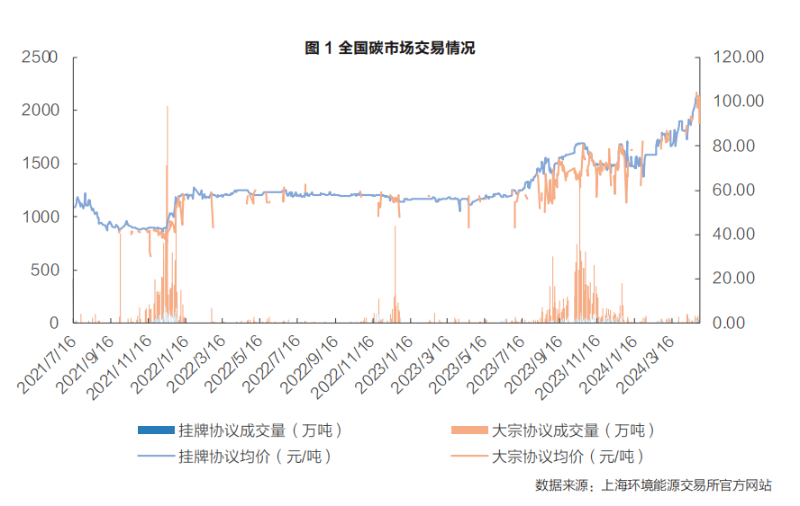
China's national carbon emissions trading market marks its fifth anniversary. Since trading officially launched on July 16, 2021, cumulative trading volume has surpassed 900 million tonnes with total transaction value exceeding 50 billion yuan. Market operations have been generally stable with gradually increasing trading activity.
Over five years, the national carbon market has expanded from its initial sole coverage of the power sector, with increasing market participants and an increasingly robust institutional framework. Carbon quota allocation mechanisms have been continuously optimized, and carbon emissions data quality management has been strengthened.
The carbon market has become an important policy tool for promoting enterprise energy conservation and emission reduction. Through paid use and market trading of carbon emission rights, carbon pricing gives economic value to emissions, effectively incentivizing enterprises to reduce carbon intensity. Controlled enterprises have significantly enhanced their carbon management awareness.
Under the carbon market's impetus, green and low-carbon development concepts have taken root. Increasingly, enterprises are incorporating carbon emissions into operational decision-making, reducing emissions through technology upgrades, energy efficiency improvements, and clean energy substitution.
China is actively advancing carbon market expansion, expected to progressively incorporate high-emission industries including steel, cement, and aluminum smelting, further expanding market coverage and influence.