
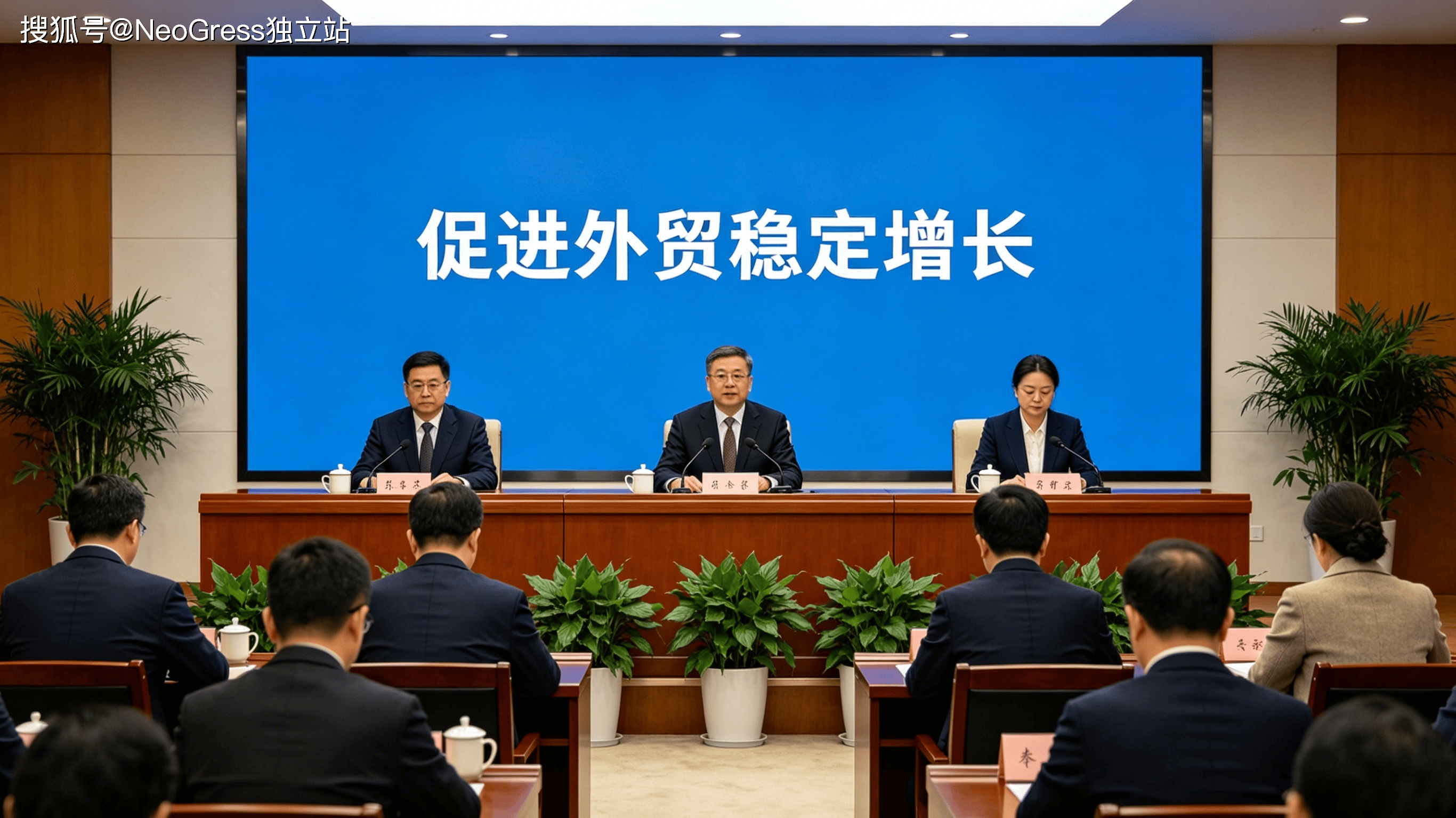
China's first-half economic data has been released. Amid turbulent external conditions, China's foreign trade delivered impressive results against the trend. In the first half of the year, total goods imports and exports reached 25.47 trillion yuan, surpassing 25 trillion yuan for the first time in records, a year-on-year increase of 16.9%.
Against the backdrop of tariff threats from across the Pacific and turmoil in the Middle East, China's foreign trade ship not only sailed steadily but also upgraded to new engines.
A prominent change is the increased 'innovation content' of exports.
In the first half, China's goods trade exports totaled 14.73 trillion yuan, up 13.4% year-on-year. Electromechanical products were the absolute main force, with exports reaching 9.36 trillion yuan, up 20.1%, accounting for 63.5% of total export value.
Notably, high-tech product exports reached 3.26 trillion yuan, up 39%, while independent brand exports grew 25.4%, with their share rising by 2.4 percentage points.
These changes are inseparable from a key word — artificial intelligence (AI).
As the global AI computing race intensifies, China's industrial chain happens to stand at a critical supply end of this track, with related industries becoming one of the core drivers of foreign trade growth.
In the first half, exports of Chinese electronic components, computer parts, and other products all achieved double-digit growth, collectively driving export growth by 6.9 percentage points. Exports of intelligent bionic robots deeply integrated with AI technology exceeded 10,000 units, reaching over 90 countries and regions worldwide.
Additionally, AI glasses, AI translators, mechanical exoskeletons, and other smart products are iterating rapidly, with various innovative products continuously emerging, embedding China's intelligent manufacturing deeply into global industrial transformation.
Beyond increased innovation content, exports of green products represented by electric vehicles and lithium batteries maintain strong momentum, with the 'green content' of exports also rising steadily.
In the first half, exports of lithium batteries and wind turbine generators grew 37.6% and 35.6% respectively; electric vehicles, railway electric locomotives, and electric motorcycles grew 68.7%, 45.1%, and 31.5% respectively.
Global green and low-carbon transformation continues to advance, with rising demand for new energy construction and consumption well-matched to Chinese green products, becoming an important pillar of export growth.
If technological innovation and green transformation represent 'hard power' at the product level, market diversification provides strategic flexibility in geographic terms.
In the first half, China's foreign trade landscape flourished across multiple markets. Trade with Belt and Road partner countries reached 12.97 trillion yuan, up 14.8%, accounting for 50.9% of total trade; exports to Latin America and Africa grew 16.2% and 19.6% respectively, and to the EU by 10.2%.
Moreover, Chinese enterprises' international 'circle of friends' continues to expand. Compared to the same period last year, 267,000 foreign trade enterprises expanded their business to new countries and regions in the first half of 2026, with their combined import and export value growing 22.6%, accounting for nearly 70% of total trade.
This diversified 'circle of friends' gives Chinese foreign trade remarkable resilience. Chinese enterprises have voted with their feet, extending business to every corner of the globe, solidifying the most fundamental base of foreign trade.
Technological innovation, green transformation, and market diversification — these 'three arrows' of China's foreign trade target higher positions in global industrial and value chains, opening up a new landscape of high-quality development.